
My own personal thoughts of this topic have moved around to different places over the past 20 or so years, so let’s start with defining some terms as I use them. Not all Witches/Wiccans/Pagans, or even Christians might agree with everything I say in my definitions, and that’s fine. I’m providing these as a way to set up my intention and explanations for this topic so that you can understand my point.
Wicca – A Neo-Pagan religious practice of Witchcraft, typically focused on European (specifically Western Europe/British Isles) culture, mythology, and history. Modern Wicca has evolved from this original traditional focus to embrace more worldly cultures and ideas, incorporating modern politics, environmentalism, and even pulling elements from other cultures and traditions of practice from around the world.
Witchcraft – A practice of folk magic. It may be attached to a religious practice, or sometimes seen as the religious practice itself. When it is either attached to or practiced as a religion, it can be referred to as Religious Witchcraft. If it is not attached to or practiced as a religion, and is only a practice of magic, it can be thought of as Generic Witchcraft.
Christianity – A religious belief focused on the reverence of Jesus Christ, who is believed to have lived on earth as a man-and-god around 2000 years ago. His teachings, as well as the teachings ascribed to those who proclaimed him as a deity in the centuries after his death are the basis for the modern Christian religions.
There are many individual beliefs, practices, and traditions that belong to each of these. Sometimes they can overlap, depending on the specifics of each one.
For myself personally, I do not believe that Wicca and Christianity are syncretic beliefs systems, meaning Wicca and Christianity are too diametrically opposed in belief and practice to be combined.
However, I have come to an understanding of certain forms of Witchcraft being syncretic with certain forms of Christianity.

This means that there are Christian beliefs that can be entirely Christian and entirely Witchcraft without seeing a disparity between them.
My personal understanding of this deepened when I sought a stronger understanding of my own cultural ancestry in Slavic Pagan practice.

Now, I do not identify as a Christian, nor as a Christian Witch, but I understand how these things may be combined in certain circumstances.
Not in all circumstances, as there are definitely Christian denominations that are strongly against any kind of witchcraft, occult, or new-age practice.
But, in some forms of Slavic Christianity (and also among Catholic-leaning American Voodoo, Latinx Santeria and Brujeria, Celtic Christianity, and other religio-cultural systems), there is a solid combination of both.
I cannot speak as to the modern combination sought by current Christians and Witches who want to find a way to connect these, outside of some of the specific cultures I mention. That will be a path for them to seek and follow on their own.
(Link to an earlier article I wrote discussing my disagreement with the label of Christian Wicca as opposed to Christian Witchcraft)
But, in Slavic Christianity as it is known to me, there is a strong blending found with Christian theology and witchcraft as a practice of folk magic.
In this belief, the person is nominally a Christian. They believe in God, Jesus, saints, demons, and the devil. But, they believe in working magic either through simple means like herbs, crafting magical items, or chanting in ritual, or sometimes summoning spirits (called ‘chorts’) or recognizing and connecting with the spiritual energy in herbs, plants, stones, the land, the weather, and so on.
Between the 7th and the 12th centuries various Slavic populations were Christianized, but this was done through a ‘top down’ kind of method, where leaders were converted to Christianity, but the populace, especially the peasants, maintained their folk beliefs and practices. So, it was a very slow process, happening little by little, where it was a natural blending of the two over many years.
The majority of the rural Slavic population relied on old myths regarding religiosity, so Christian priests and monks, especially in Russia, had to fight against the so-called Russian paganism or dvoeverie (double faith) of the people practicing both Christianity and Paganism.
Eventually, the Russian peasants accepted new Christian holidays and masses as well as the observance of baptism.
On the other hand, they kept on worshiping old pagan cults and ancient rites as they didn’t consider Christianity as a replacement of the old Slavic paganism but its extension.
For rural pagans, Christianity offered hope and salvation in the afterlife. However, in order to survive in the earthly world, have a bountiful harvest and protect the cattle, they had to rely on the old religious system with protective deities, fertility rites, and rituals.
The mythological view of the world which explained natural phenomena could not be easily erased. Therefore, certain Christian saints and martyrs replaced pagan deities of a certain cult.
For example, Jarilo, a pagan god of fertility and vegetation has been syncretized with Saint George.
It was later in the 12th century that an actual crusade was launched by Christian military orders to force Western and Russian Slavic Pagans to convert to Christianity. This is known as the Baltic Crusade or Northern Crusade.
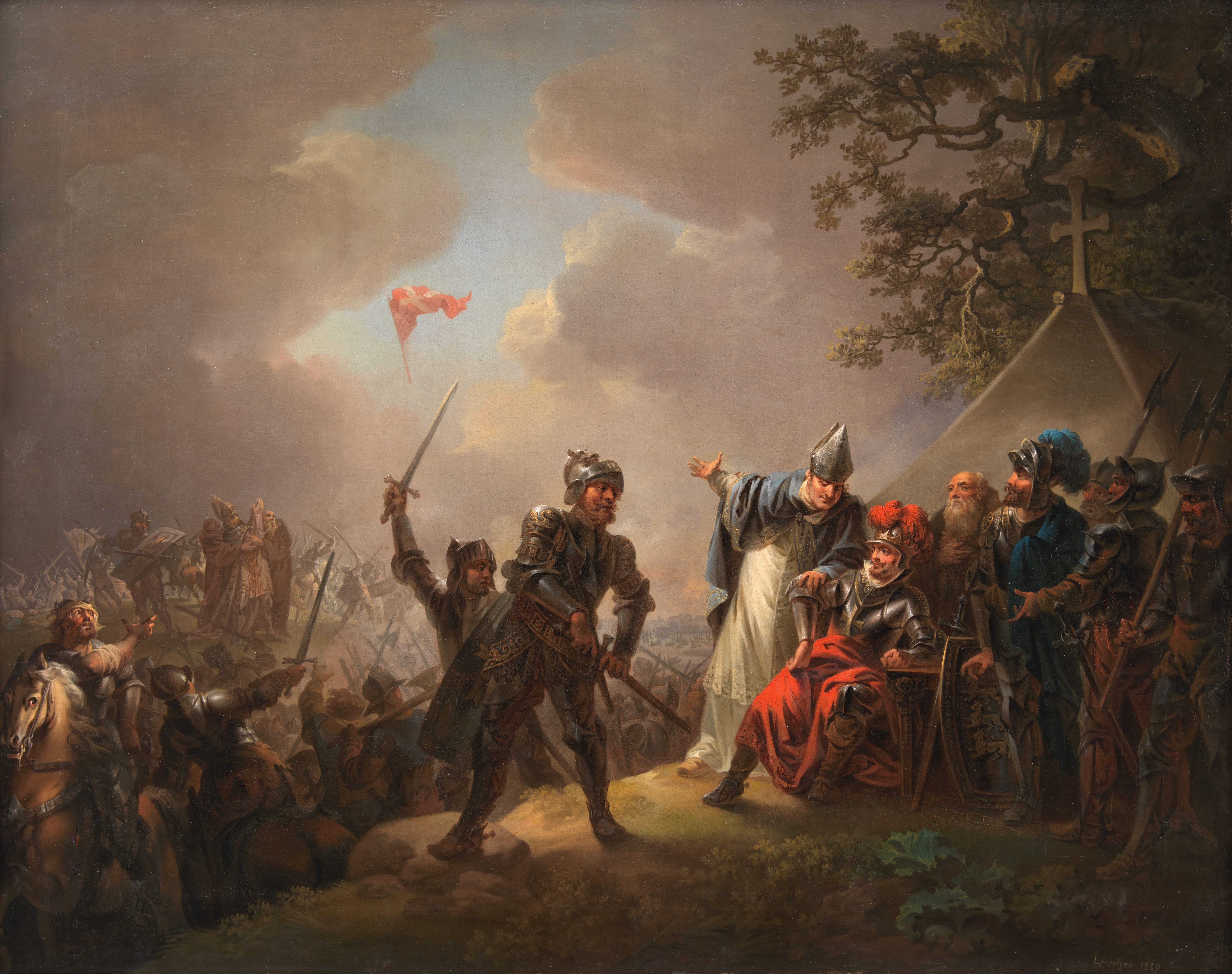
Even into the late 1800’s, when these areas were solidly named as Christian, you would still find an active practice of witchcraft being done. People would attend church on Sunday morning, observe the holy days of the calendar throughout the year, and still visit the village witch for a charm to help with fertility or to be freed from a curse of bad fortune. The witch would most often call on God, Mary, or one of the saints when working their craft.
Slavic Witches today are likely to do the same if they have not sought to learn of and work with the ancient Pagan deities. So, they are Christian witches.
Modern Slavic Pagans seeking to reconnect with the old gods for their religious fulfillment still must go through the Christian lens to find them. In Europe, before Christianity took hold in the Slavic lands, these beliefs and rituals were not written down. So, there is hardly any actual record available about Paganism, their gods, and Witchcraft from the hand of an ancient Pagan or Witch.

We cobble together a practice based on the folk traditions and magics that have survived through to the current era, and these are heavily syncretized with Christianity.
Herbs for a fertility charm are likely to be gathered with a prayer to Mary mother of Jesus rather than Mokos, the goddess of fertility and motherhood. But the charm itself is still Witchcraft.
It’s just done with Christian gods and traditions now.
 The Keeper's Path